
 27 Nov 2026
 6 min read
Luxury African safaris can range from private game drives to guided tracking, water-based activities, and fly-in itineraries. Compare wildlife focus, pace, comfort, flexibility, and what each package includes; then discuss a bespoke itinerary that fits your group and priorities.
Compare luxury African safari styles at a glance
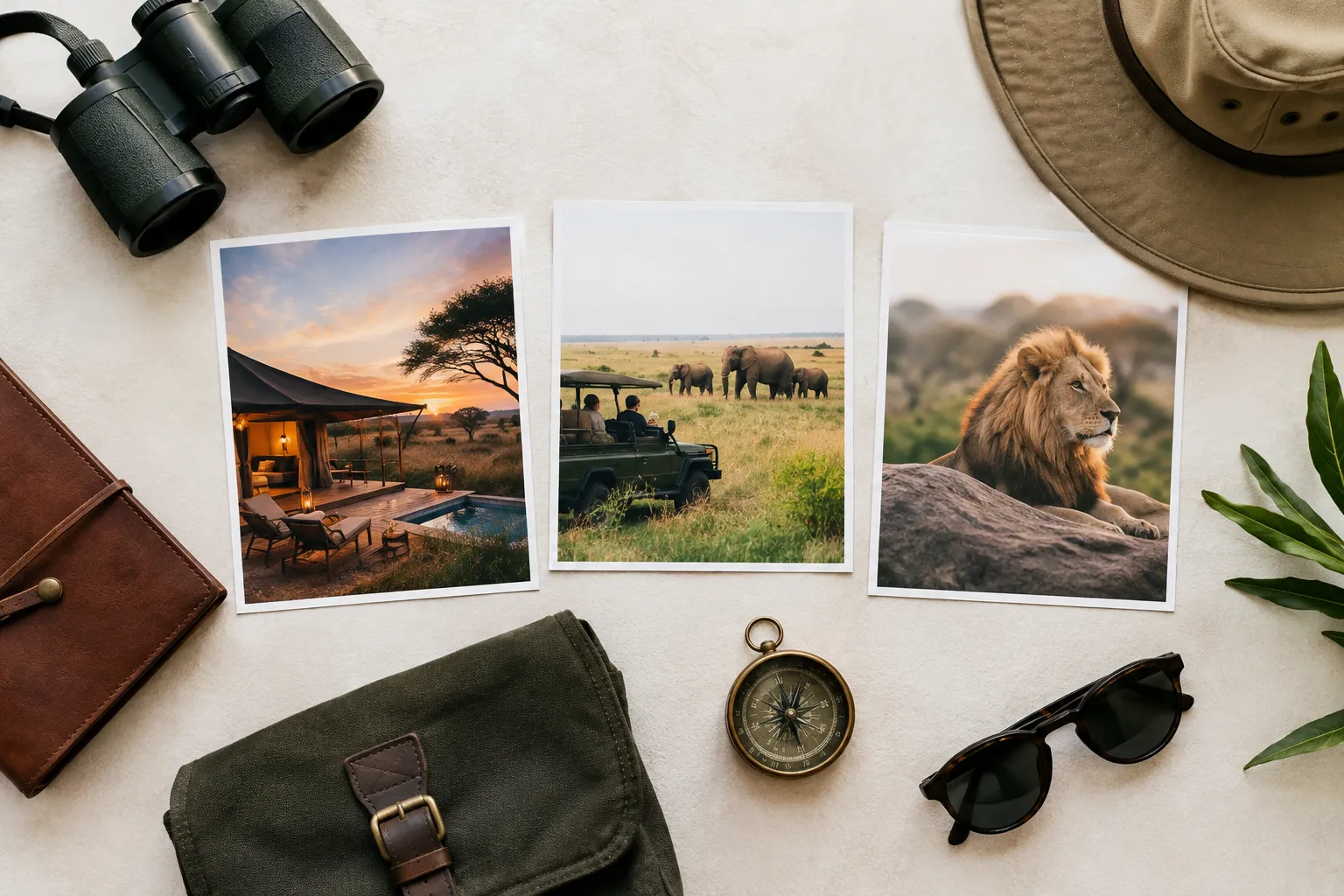
Private drives, walking and tracking, water-based activities, and fly-in itineraries differ mainly in how they shape wildlife encounters, daily pace, and travel logistics. The right choice depends on which trade-offs suit your trip.
| Safari style | Wildlife focus | Pace | Comfort considerations | Flexibility and trade-offs |
|---|---|---|---|---|
| Private game drives | Wildlife viewed from a vehicle with a guide | Structured around drives and time between activities | Ask about vehicle arrangements, drive duration, and time between outings | Private arrangements may allow group decisions; confirm how changes are handled |
| Walking and tracking | Wildlife signs and surroundings explored on foot with a guide | More active and attentive to the ground and environment | Ask about walking requirements and what support is available | A distinct way to experience the landscape, but it may not suit every traveler |
| Water-based activities | Wildlife and landscapes observed from the water where available | Shaped by the activity and the location | Confirm what the activity involves and how it fits with other plans | Adds variety, though availability depends on the destination and itinerary |
| Fly-in or multi-region itineraries | Wildlife experiences across more than one area | Travel days and transfers shape the rhythm | Confirm luggage arrangements, connections, and accommodation at each stop | Covers varied locations, but transfers can reduce time at wildlife areas |
This comparison describes planning questions, not guaranteed features of any particular package. Ask the operator to explain how each activity, transfer, and lodging commitment applies to the itinerary under discussion.
The word “luxury” alone does not identify a consistent set of inclusions. For African luxury safaris, compare the actual services and arrangements rather than assuming that a label means the same thing across operators. If meals, transfers, or activities are described as included, ask what that means for each day. These all-inclusive safari details can help frame questions about package contents.
For a group, add a decision rule before comparing offers: list the experiences everyone considers essential, then record where preferences differ. That makes it easier to judge whether a private custom safari can accommodate the group’s priorities without treating every traveler as if they want the same pace.
Choose a destination for its landscapes and wildlife
Choose a destination by matching its landscapes and wildlife opportunities to the encounters you want, then check whether the itinerary gives those priorities enough time. No region is the right fit for every traveler.
East African plains, Southern African reserves, and wetlands offer different settings for safari travel. The useful comparison is not a universal ranking; it is whether the landscape and activities suit your interests, travel rhythm, and comfort needs. Ask which wildlife experiences are central to the proposed route and how much time the itinerary allows for them.
Kenya is one option to explore when comparing African safaris luxury travelers may consider. Review the proposed locations and movement between them rather than choosing a destination by name alone. Our Kenya safari packages provide a related starting point for comparing Kenya-focused options.
A multi-stop journey can connect different landscapes, but the route needs to account for transfers. Ask whether travel between stops reduces time at wildlife locations, and whether the schedule leaves room for the activities that matter most to your group. A route with more stops is not automatically a better fit if the added movement works against your preferred pace.
Match the safari experience to your wildlife priorities
Choose activities according to how you want to encounter wildlife: drives offer vehicle-based viewing, while guided walking and tracking emphasize the surrounding landscape and signs of animal presence. Combining activities can add variety if the itinerary allows time for each.
Game drives, walks, tracking, and water-based activities create different daily rhythms. Ask what each activity involves, how it fits into the day, and whether it is available in the places on your route. Do not assume that an activity is included simply because it appears in a general description of safari experiences.
Expert-led wildlife tracking can be part of a broader wildlife-focused trip, but the itinerary should explain what that means in practice. Ask who guides the activity, what the group will do, and how the experience fits alongside drives or other plans. For ideas beyond familiar wildlife-viewing formats, explore distinctive safari experiences.
For shared activities, compare how group decisions are made. Ask whether the group follows one agreed schedule or how differing preferences are handled. This is especially useful for travelers who want a mix of active outings and time to rest: agreement on the daily rhythm can matter as much as the activity list.
Compare accommodation, itineraries, and what is included
Compare the accommodation commitment, transfer plan, activities, meals, and daily pace together; a lodge name or comfort label alone does not explain what the full trip delivers.
Request a written itinerary that identifies the accommodation planned for each stop and explains what is included. If a property or room category changes, ask how the operator will notify you, when you will be told, and what alternative arrangement would be proposed. A direct answer before booking is more useful than a general promise about comfort.
Check that the itinerary distinguishes travel days from wildlife days. On multi-stop trips, ask whether transfers reduce time at wildlife locations and how the schedule accounts for that movement. Then compare the proposed pace with your group’s preferences: frequent changes of location may appeal to travelers seeking variety, while fewer stops may better suit those who want a steadier rhythm.
Review inclusions line by line. Ask which meals, transfers, guiding, and activities are part of the quoted arrangement, and which are separate. For luxury African safaris tours, this detail lets you compare like with like instead of relying on broad package descriptions.
Accommodation transparency deserves its own questions. Confirm the planned properties before committing, ask what happens if a listed option becomes unavailable, and request an explanation of how any replacement would be communicated. These steps do not guarantee that plans cannot change; they help you understand the process before travel.
Plan a bespoke safari around your comfort priorities
A bespoke safari is useful when wildlife interests, travel pace, accommodation preferences, and practical logistics need to fit together rather than follow a fixed template.
Start with the experiences that matter most, then set the comfort priorities that should shape the route. For example, a group might place guided tracking first, want clear accommodation commitments, and prefer fewer transfer days. Those priorities give an operator a practical basis for discussing destinations and itinerary structure without assuming that every traveler values the same things.
Expeditions Wild Jungle offers bespoke safari planning. With six years of experience, the brand focuses on bespoke African safaris and expert-led wildlife tracking experiences. When discussing an itinerary, share your preferred activities, the group’s needs, and any lodging or transfer questions early.
A custom plan is not automatically the right choice for every traveler. If your priorities already match a defined route, compare that itinerary directly; bespoke planning is most relevant when you need the pieces coordinated around specific interests or comfort requirements.
Discuss your safari options with Expeditions Wild Jungle
Share your wildlife priorities, preferred comfort level, timing, and route preferences with Expeditions Wild Jungle to discuss whether a bespoke itinerary fits your trip.
The clearer your priorities, the more focused the conversation can be. For group travel, include shared must-haves and note where travelers disagree; for accommodation, ask how planned stays and any changes would be communicated.
Recommended next steps
Move from broad comparisons to a specific itinerary by recording your priorities, checking the package details, and discussing unresolved questions with the operator.
- List the wildlife experiences and destinations your group most wants to include.
- Compare proposed itineraries by pace, transfers, accommodation, activities, and stated inclusions.
- Ask how unavailable accommodation would be handled and how you would be informed of a change.
- Share your comfort priorities and remaining questions with Expeditions Wild Jungle to discuss a bespoke safari.