


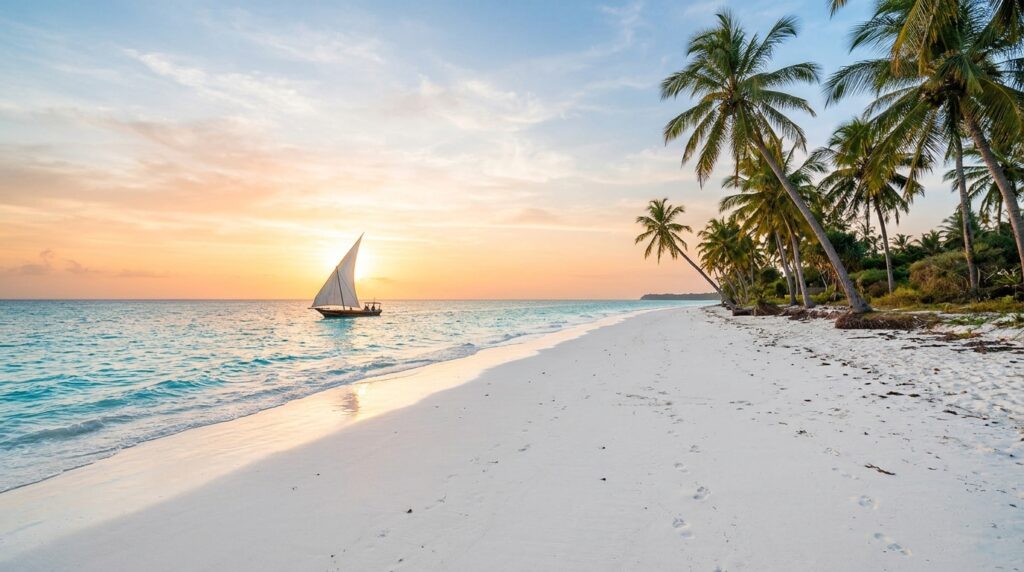
Planning Zanzibar beach holidays requires balancing the slow, restorative rhythm of the Indian Ocean coast with practical decisions around tides, seasonal winds, and regional flight connections. Located just off the coast of mainland Tanzania, the Unguja archipelago—commonly referred to as Zanzibar—combines coral-fringed lagoons, historic Swahili architecture, and spice-scented interiors within a compact island footprint. Whether designed as a standalone coastal retreat or the final unwinding chapter after an East African wildlife safari, a well-paced stay depends on matching the right coastline to your travel style and allowing enough breathing room to genuinely slow down.
Why Zanzibar Works for a Restorative Coastal Break
A successful coastal holiday relies on contrast and ease of movement. For travelers exploring East Africa, Zanzibar offers an immediate shift in sensory pace—moving from dusty savannah game drives or bustling highland cities to warm, shallow lagoons and salt-breezed evenings. Unlike vast island nations that require multiple domestic flights to explore, Zanzibar is small enough that road transfers between the airport, historic Stone Town, and major coastal stretches rarely exceed ninety minutes.
At the same time, beach holidays in Zanzibar are not uniform across the island. The coastline behaves differently depending on which direction it faces, how close the barrier reef sits to the shore, and what time of year you arrive. Understanding these geographic nuances before booking prevents the most common planning frustrations—such as expecting all-day deep-water swimming on a tidal lagoon coast or packing too many hotel transfers into a five-day window.
Understanding Zanzibar’s Coastlines and Tides
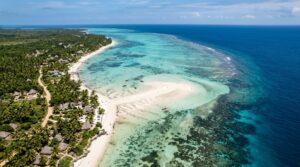
The single most important factor when choosing a Zanzibar beach base is the Indian Ocean tidal cycle. Because Zanzibar experiences pronounced semi-diurnal tides—two high tides and two low tides every 24 hours—the shoreline transforms dramatically throughout the day.
| Coastal Region | Key Beach Areas | Tidal Behavior & Swimming | Atmosphere & Best Fit |
| North & Northwest | Nungwi, Kendwa | Minimal tidal retreat; deep water close to shore allows swimming all day. | Lively social scene, sunset dhow cruises, classic wide sand beaches. |
| Northeast | Matemwe, Kiwengwa, Pongwe | Pronounced tides; water retreats across a wide reef flat at low tide. | Quiet, intimate boutique stays; prime access to Mnemba Atoll reefs. |
| Southeast | Paje, Jambiani, Bwejuu | Dramatic tidal swings creating vast sandbars and shallow turquoise lagoons. | Laid-back coastal villages, kitesurfing hub, long tidal sand walks. |
| Southwest & South | Kizimkazi, Fumba Peninsula | Sheltered bays and mangrove inlets; boat-dependent reef access. | Secluded retreats, dhow sandbank excursions, quiet coastal living. |
The North and Northwest Coast (Nungwi and Kendwa)
On the northern tip of the island, the continental shelf drops off closer to the beach. As a result, Nungwi and neighboring Kendwa experience far less dramatic tidal retreat than the eastern side of the island. Travelers who prioritize effortless ocean swimming at any hour of the day—without having to check a tide chart first—usually gravitate here. Because these beaches face west-northwest, they are also the premier spots on the island for watching the sun drop directly into the ocean. The trade-off is higher foot traffic, more beachfront bars, and a busier social energy.
The Northeast Coast (Matemwe, Kiwengwa, and Pongwe)
Stretching south from the northern tip, the northeast coast sits behind an offshore coral reef. At high tide, calm turquoise water laps right up to the palm line. At low tide, the sea recedes hundreds of meters, exposing coral rag, tide pools, and seagrass beds. While this limits mid-day swimming to property pools or high-tide windows, it creates an extraordinarily peaceful, uncrowded environment. Matemwe serves as the closest mainland launch point for snorkeling and diving trips around Mnemba Atoll, while sheltered coves like Pongwe offer protection from seasonal winds.
The Southeast Coast (Paje, Jambiani, and Michamvi)
The southeast coast combines powdery white sand with the island’s widest tidal lagoons. During low tide, local seaweed farmers tend their plots in the shallow pools, and visitors can walk far out toward the reef edge. When steady trade winds blow, Paje becomes one of East Africa’s premier kitesurfing hubs, drawing an active, barefoot crowd. Just a few kilometers south in Jambiani or north on the Michamvi Peninsula, the mood shifts back to quiet village life and secluded coves.
Stone Town as a Cultural Anchor
While not a swimming destination, Stone Town—the historic heart of Zanzibar City and a UNESCO World Heritage Site—deserves one or two nights at the beginning or end of a trip. Its narrow coral-stone alleys, intricately carved wooden doors, spice markets, and waterfront evening food stalls ground a beach holiday in centuries of Swahili, Omani, Indian, and European maritime history.
Best Time of Year for Zanzibar Beach Holidays

Zanzibar enjoys warm tropical temperatures year-round, with daytime highs typically hovering between 28°C and 32°C and ocean temperatures rarely dipping below 25°C. However, two distinct monsoon wind systems—the Kaskazi (northeast trade winds) and the Kusi (southeast trade winds)—shape rainfall, humidity, and sea conditions.
- June to October (Peak Dry Season): Driven by the cooler, drier Kusi winds, these months deliver sunny skies, low humidity, and comfortable daytime temperatures around 28°C to 30°C. Because this window aligns directly with the dry-season safari peak in Kenya and Tanzania, it is the most popular time for combined bush-and-beach itineraries.
- December to February (Hot Dry Season): The Kaskazi winds bring warmer, more humid conditions and calm, crystal-clear ocean visibility—making January and February standout months for scuba diving, snorkeling, and underwater photography.
- March to May (Long Rains / Masika): Heavy tropical downpours peak in April and May. Several coastal properties close for annual maintenance during this period, though travelers willing to accept unpredictable weather will find quiet beaches and lower accommodation rates.
- November (Short Rains / Vuli): Characterized by brief, localized afternoon showers interspersed with bright sunshine. It serves as a pleasant shoulder season with thinner crowds before the December holiday rush.
How Many Days Do You Need—and How Should You Pace Them?
One of the most common missteps when planning beach holidays on the island is treating Zanzibar like a sightseeing checklist. Road speeds are modest, midday heat encourages slow lunches, and the entire point of a coastal stay is decompression.
- 4 to 5 Nights (The Post-Safari Unwind): Ideal as a concluding chapter after a mainland wildlife circuit. Commit to one coastal base (plus at most one night in Stone Town if flight schedules dictate). Changing beach hotels on a four-night stay consumes half a day in packing, checkout, and road transfers.
- 6 to 8 Nights (The Balanced Island Escape): Allows you to pair one or two nights in Stone Town with five or six nights on a single beach stretch. This gives enough time for one full-day marine excursion, a spice farm or forest visit, and three or four completely unscheduled beach days.
- 10+ Nights (Two-Coast Exploration): Recommended only if Zanzibar is the primary focus of your trip. Splitting time between the lively north coast (for all-tide swimming and sunsets) and the tranquil east coast (for lagoon walks and reef privacy) lets you experience both sides of the island without feeling rushed.
Structuring a Relaxing 6-Day Rhythm
Rather than booking daily excursions back-to-back, alternate active mornings with open afternoons:
- Day 1: Arrive at Abeid Amani Karume International Airport (ZNZ), transfer to Stone Town (15–20 minutes), and take a gentle late-afternoon walk along the waterfront.
- Day 2: Morning guided walking tour of Stone Town’s historic quarter, followed by an afternoon transfer to your chosen beach base via a fragrant inland spice plantation.
- Day 3: Unstructured beach and lagoon day—read under a palm canopy, walk the sandbar at low tide, and adjust to island time.
- Day 4: Morning marine excursion—such as reef snorkeling near Mnemba Atoll or a traditional wooden dhow sail to a sheltered sandbank—returning by mid-afternoon.
- Day 5: Optional morning visit to Jozani Chwaka Bay National Park to observe endemic Zanzibar red colobus monkeys along the mangrove boardwalk, keeping the afternoon entirely free for a sunset dhow cruise.
- Day 6: Slow breakfast overlooking the Indian Ocean before your airport transfer.
Fitting Zanzibar into a Broader East Africa Itinerary
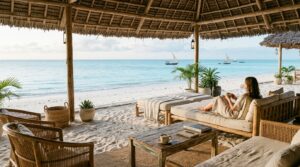
Zanzibar’s geographic position makes it one of the easiest coastal extensions in Africa. Regional airlines operate frequent daily short-haul flights connecting Zanzibar directly to major safari hubs—eliminating the need for exhausting multi-day overland detours.
- Northern Tanzania Safari Circuit (Serengeti, Ngorongoro, Tarangire): Light aircraft fly directly from bush airstrips in the Serengeti or from Kilimanjaro International Airport (JRO) and Arusha (ARK) straight to Zanzibar in roughly 1.5 to 2 hours.
- Kenya Safari Circuit (Maasai Mara, Amboseli, Tsavo): Direct regional flights link Nairobi’s Wilson Airport (WIL) or Jomo Kenyatta International Airport (NBO) and Mombasa (MBA) to Zanzibar in about 1.5 hours, making it effortless to pair a Kenyan wilderness expedition with a Tanzanian island stay.
- Southern Tanzania Circuit (Nyerere / Selous & Ruaha): Short bush flights connect southern safari airstrips via Dar es Salaam (DAR) to Zanzibar in under an hour.
Safari First, Beach Second
Whenever schedules allow, place your safari at the start of the itinerary and Zanzibar at the end. Wildlife safaris involve pre-dawn wake-up calls, bumpy dirt tracks, and dust—rewarding experiences that naturally build physical fatigue. Ending on the coast lets you wash off the safari dust, sleep without an alarm, and process your wildlife encounters in comfort before flying home.
Practical Planning Details to Check Before You Go
A smooth coastal holiday comes down to handling small administrative and cultural details before departure:
- Entry Requirements and Mandatory Travel Insurance: Check visa rules based on your nationality—citizens of East African Community partner states do not require a visa for Tanzania, while many international travelers can obtain an e-Visa or visa on arrival. In addition, foreign visitors entering Zanzibar are required to hold mandatory inbound travel insurance issued through the official Zanzibar Insurance Corporation portal prior to arrival.
- Luggage Limits on Bush Flights: If you are flying into Zanzibar directly from a safari airstrip on a small turboprop aircraft, strict soft-sided duffel bag weight limits (typically 15 kg to 20 kg including hand luggage) apply. Pack lightweight, breathable fabrics that transition easily from the bush to the coast.
- Cultural Respect and Dress Etiquette: Zanzibar has a predominantly Muslim population with deeply rooted coastal traditions. Swimwear is completely appropriate on resort beaches and pools, but when walking through Stone Town, local fishing villages, or markets, both men and women should cover shoulders and knees out of respect for local customs.
- Currency and Payments: The Tanzanian Shilling (TZS) is the local currency, while US Dollars (printed in 2009 or later and in crisp, undamaged condition) are widely accepted for hotel bills, park fees, and excursions. Carry small denominations of local currency for village cafés, tips, and market purchases, as card machines can occasionally lose connectivity.
- Reef-Safe Sun Protection and Marine Ethics: Zanzibar’s coral reefs and seagrass meadows support fragile marine ecosystems. Pack biodegradable, reef-safe sunscreen, avoid standing on live coral while snorkeling, and choose marine operators that maintain respectful distances from wild dolphins and sea turtles rather than crowding animals with boats.
Bringing Your Coastal Itinerary Together
Designing a relaxing stay on Zanzibar is less about squeezing every excursion into a single week and more about choosing the right shoreline for how you want to spend your days. When your coastal base matches the seasonal winds, tidal rhythm, and pace of your broader journey, the island does the rest of the work. If you are mapping out a standalone island escape or looking to pair Zanzibar beach holidays with a custom East African wildlife safari, explore our curated regional options on our Beach Holidays page to start shaping a route tailored to your dates and travel style.